Crisps vs Plain Popcorn and Vegetable Sticks – Nutrient Breakdown
An educational comparison of the nutrient profiles of commonly consumed savoury packaged snacks and whole-food alternatives available in UK households.
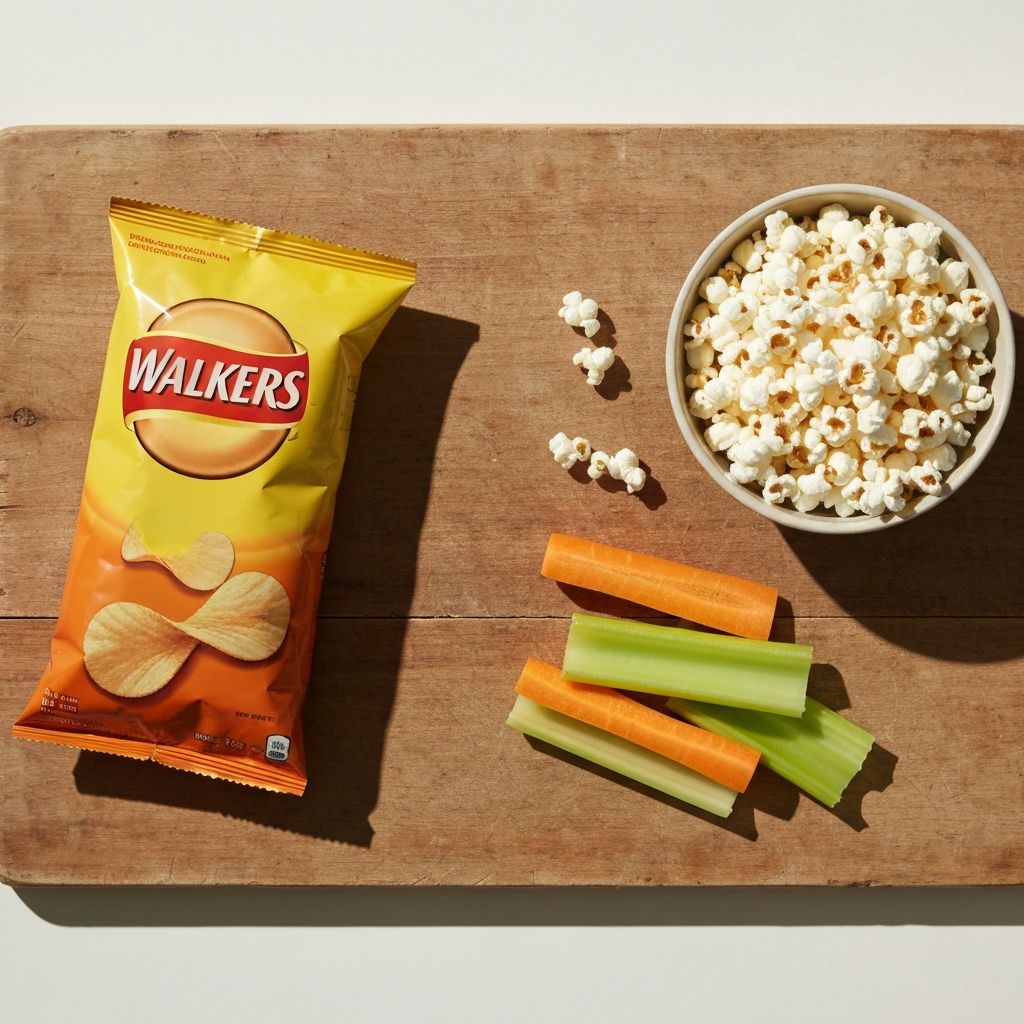
Introduction
Savoury packaged snacks, particularly crisps, are among the most frequently consumed snack foods in UK households. This article presents factual, informational comparisons of their nutrient composition alongside whole-food alternatives such as plain popcorn and fresh vegetable sticks. No endorsement of any option is made; this comparison is purely educational.
Crisps – Nutrient Profile
Crisps are processed snacks made from potatoes that have been sliced thin, fried or baked, and typically seasoned with salt and flavourings. Below is a typical nutrient profile per 100 grams for standard salted crisps:
| Nutrient | Per 100g | Per Single-Serve Pack (28g) |
| Energy | 530 kcal | 148 kcal |
| Fat | 35g | 9.8g |
| Saturated Fat | 8g | 2.2g |
| Carbohydrates | 50g | 14g |
| Sugars | 2g | 0.6g |
| Fibre | 2g | 0.6g |
| Protein | 5g | 1.4g |
| Salt | 1.5g | 0.42g |
Key characteristics: High energy density, high fat content, minimal fibre, typical packaged single-serve portion is 25–35g, shelf-stable due to low moisture content.
Plain Popcorn – Nutrient Profile
Plain popcorn refers to popcorn prepared without added fats, salt, or flavorings. Air-popped popcorn has a very different nutrient profile compared to crisps:
| Nutrient | Per 100g (popped) | Per Typical Serving (20g) |
| Energy | 387 kcal | 77 kcal |
| Fat | 4g | 0.8g |
| Saturated Fat | 0.7g | 0.14g |
| Carbohydrates | 77g | 15.4g |
| Sugars | 0.5g | 0.1g |
| Fibre | 9g | 1.8g |
| Protein | 12g | 2.4g |
| Salt | 0g (when unsalted) | 0g |
Key characteristics: Lower fat content, significantly higher fibre, higher protein, lower energy density, requires time to consume due to larger volume, no added salt unless applied separately.
Vegetable Sticks – Nutrient Profile
Fresh vegetable sticks, such as carrot and celery, represent whole food alternatives with minimal processing. Below is a typical profile for carrot sticks:
| Nutrient | Per 100g | Per Typical Serving (70g) |
| Energy | 41 kcal | 29 kcal |
| Fat | 0.2g | 0.14g |
| Saturated Fat | 0g | 0g |
| Carbohydrates | 10g | 7g |
| Sugars | 5g | 3.5g |
| Fibre | 2.8g | 2g |
| Protein | 0.9g | 0.6g |
| Water | 88g | 62g |
Key characteristics: Very low energy density, high water content, minimal processing, require significant chewing, naturally sweet from sugars without added sweeteners, perishable with short shelf life.
Key Nutrient Differences – Summary
| Nutrient Aspect | Crisps | Plain Popcorn | Vegetable Sticks |
|---|---|---|---|
| Energy Density | High (530 kcal/100g) | Moderate (387 kcal/100g) | Very Low (41 kcal/100g) |
| Fat Content | High | Low | Minimal |
| Fibre | Minimal | High | Moderate |
| Protein | Low | High | Very Low |
| Water Content | Very Low | Moderate | Very High |
| Added Salt | Present | None (if unsalted) | None |
| Processing Level | Highly processed | Minimally processed | Whole food |
| Shelf Life | Long | Moderate | Short |
Processing and Eating Rate
An important difference between these snack options is the eating rate and consumption pattern. Crisps are consumed quickly due to their crisp texture, small size, and lack of resistance. Plain popcorn requires more time to consume due to larger volume and need for chewing. Vegetable sticks require significant chewing and have high water content, which affects the eating experience considerably. These differences in consumption patterns are informational only and represent natural variation in how foods are eaten.
Satiety Considerations
Satiety, or the feeling of fullness after eating, is influenced by several factors including fibre content, water content, protein content, eating rate, and individual preference. Vegetable sticks have high water and moderate fibre content with minimal calories. Plain popcorn has higher fibre and protein with moderate water content. Crisps have low fibre and water with high fat. Individual responses to these foods vary widely based on personal factors including taste preferences, cultural background, texture preferences, and individual digestive responses.
Informational Context
This article presents factual nutritional information for educational purposes only. It does not provide dietary advice, health recommendations, or outcome predictions. Individual responses to different foods vary widely. This information is not a substitute for professional dietary or health guidance. For personalised advice, consult qualified healthcare professionals.