Digestive Biscuits vs Oatcakes and Apple Slices
An informational comparison of the nutrient profiles of commonly consumed biscuits and alternatives such as oatcakes and fresh apple slices.
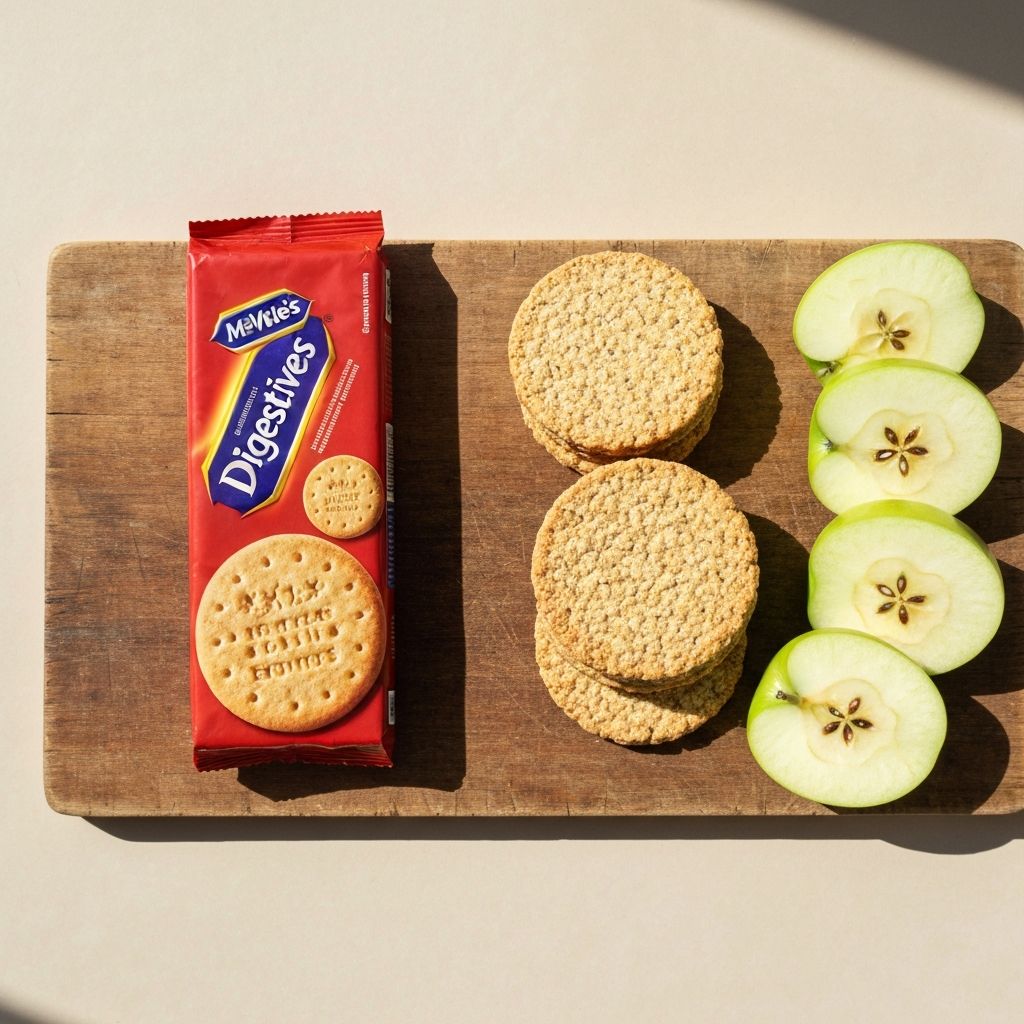
Introduction
Biscuits are extensively consumed in UK households, often as everyday snacks or accompaniments to tea and coffee. This article presents factual, informational comparisons of typical biscuit nutrient profiles alongside alternatives such as oatcakes and fresh fruit. No endorsement or ranking is made; this comparison is educational.
Digestive Biscuits – Typical Nutrient Profile
Digestive biscuits are a popular semi-sweet biscuit category. Below is typical nutrient information per 100 grams:
| Nutrient | Per 100g | Per Typical Biscuit (14g) |
| Energy | 471 kcal | 66 kcal |
| Fat | 21g | 2.9g |
| Saturated Fat | 9g | 1.3g |
| Carbohydrates | 64g | 9g |
| Sugars | 21g | 2.9g |
| Fibre | 3.2g | 0.45g |
| Protein | 6.8g | 0.95g |
| Salt | 0.7g | 0.1g |
Key characteristics: High energy density, moderate sugar content, minimal fibre relative to weight, long shelf life, convenient portion-controlled biscuits, shelf-stable packaging.
Oatcakes – Nutrient Profile
Plain oatcakes offer a different nutrient composition. Below is typical information per 100 grams:
| Nutrient | Per 100g | Per Typical Oatcake (15g) |
| Energy | 440 kcal | 66 kcal |
| Fat | 20g | 3g |
| Saturated Fat | 3.5g | 0.5g |
| Carbohydrates | 66g | 9.9g |
| Sugars | 0.5g | 0.08g |
| Fibre | 6g | 0.9g |
| Protein | 11g | 1.65g |
| Salt | 0.6g | 0.09g |
Key characteristics: Moderate energy density, minimal added sugars, higher fibre content, higher protein, made from whole grain oats, shelf-stable, less refined than biscuits.
Apple Slices – Nutrient Profile
Fresh apples represent a whole-food alternative. Below is typical information per 100 grams:
| Nutrient | Per 100g | Per Medium Apple (182g) |
| Energy | 52 kcal | 95 kcal |
| Fat | 0.2g | 0.4g |
| Saturated Fat | 0g | 0g |
| Carbohydrates | 14g | 25g |
| Sugars | 10g | 18g |
| Fibre | 2.4g | 4.4g |
| Protein | 0.3g | 0.5g |
| Water | 86g | 156g |
Key characteristics: Very low energy density, high water content, moderate fibre, naturally sweet from fruit sugars, no added ingredients, perishable, requires refrigeration or cool storage.
Key Nutrient Differences – Summary
| Nutrient Aspect | Digestive Biscuit | Oatcake | Apple Slices |
|---|---|---|---|
| Energy Density | High | Moderate-High | Very Low |
| Sugar Content | Moderate (Added) | Minimal (Added) | Moderate (Natural) |
| Fibre | Low | Moderate | Moderate |
| Protein | Moderate | Moderate | Very Low |
| Water Content | Very Low | Very Low | Very High |
| Processing Level | Highly Processed | Minimally Processed | Whole Food |
| Shelf Life | Very Long | Long | Short |
Whole Grain Differences
Oatcakes are made from whole grain oats and contain naturally higher fibre and protein than refined biscuits. Digestive biscuits contain wheat flour which may be refined or semi-refined, resulting in lower natural fibre content despite added sugars. This represents a compositional difference between whole grain and refined grain products, presented informationally.
Volume and Eating Experience
An important consideration is portion size and eating experience. A biscuit provides a small, dense, quick-to-consume snack. An oatcake is similar but may have different texture and flavour. Fresh apple provides significantly more volume and requires chewing, with high water content. These differences in consumption experience vary by individual preference and context. This is informational only.
Informational Context
This article presents factual nutritional information for educational purposes only. It does not provide dietary advice, health recommendations, or outcome predictions. Individual responses to different foods vary widely. This information is not a substitute for professional dietary or health guidance. For personalised advice, consult qualified healthcare professionals.