Sweets and Confectionery vs Natural Yoghurt and Frozen Berries
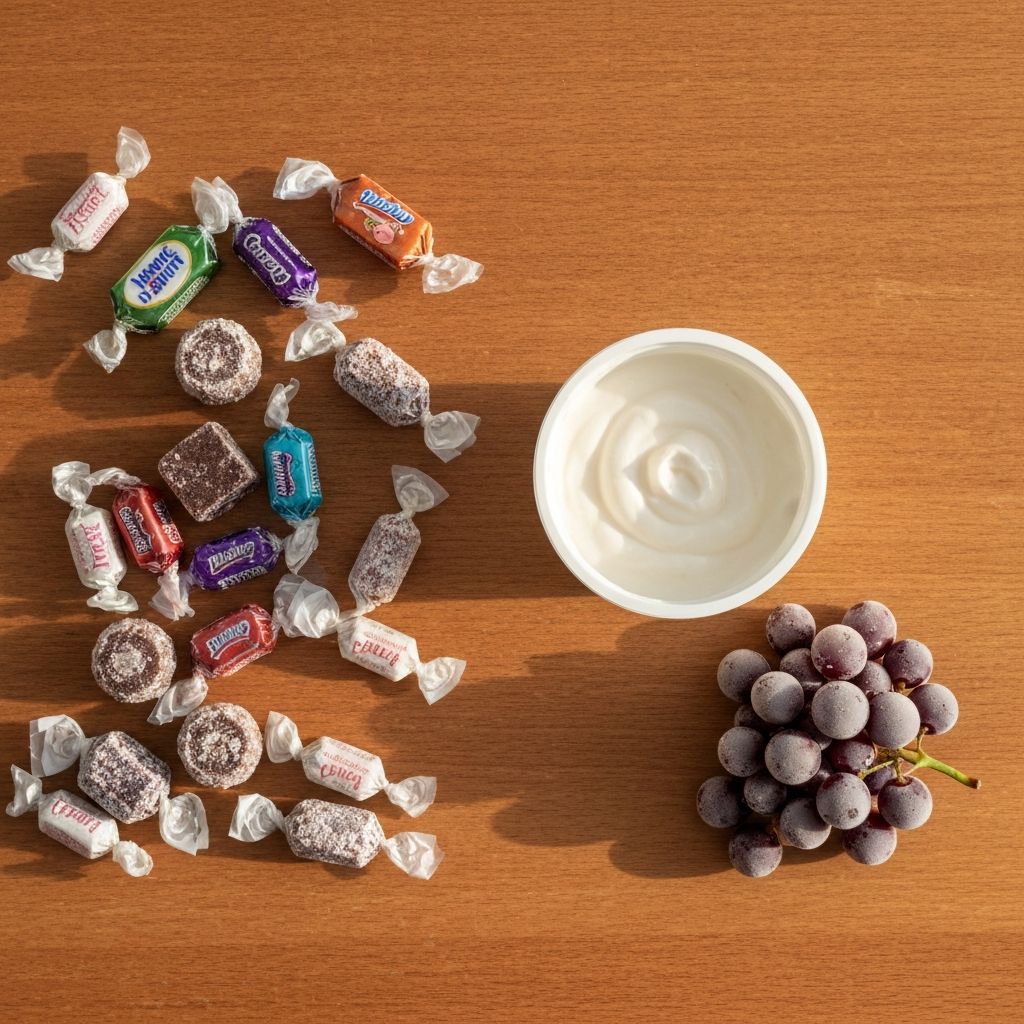
An informational comparison of the nutrient profiles of wrapped sweets and confectionery products alongside alternatives such as natural yoghurt and frozen berries.
Introduction
Sweets and confectionery products are extensively consumed across the UK, particularly during social occasions and as impulse purchases. This article presents factual, informational comparisons of typical confectionery nutrient profiles alongside readily available alternatives. No endorsement or ranking is made; this comparison is purely educational.
Sweets and Confectionery – Typical Nutrient Profile
Wrapped hard sweets and boiled confectionery are primarily composed of sugars and gelling agents. Below is typical nutrient information per 100 grams:
| Nutrient | Per 100g | Per Single Sweet (5g) |
| Energy | 327 kcal | 16 kcal |
| Fat | 0g | 0g |
| Saturated Fat | 0g | 0g |
| Carbohydrates | 82g | 4.1g |
| Sugars | 82g | 4.1g |
| Fibre | 0g | 0g |
| Protein | 0g | 0g |
Key characteristics: Very high sugar concentration, zero fat, zero fibre, zero protein, pure carbohydrate confectionery, shelf-stable with very long shelf life, long-lasting in mouth due to structure.
Natural Yoghurt – Nutrient Profile
Plain, natural yoghurt (specifically Greek-style for comparison) offers a vastly different nutrient composition. Below is typical information per 100 grams:
| Nutrient | Per 100g | Per 150g Serving |
| Energy | 59 kcal | 89 kcal |
| Fat | 0.4g | 0.6g |
| Saturated Fat | 0.2g | 0.3g |
| Carbohydrates | 3.2g | 4.8g |
| Sugars | 3.2g | 4.8g |
| Fibre | 0g | 0g |
| Protein | 10g | 15g |
| Water | 85g | 128g |
Key characteristics: Very high protein, very low sugar, minimal fat, no added sweeteners (in natural yoghurt), high water content, perishable requiring refrigeration, creamy texture.
Frozen Berries – Nutrient Profile
Frozen berries, such as grapes frozen naturally, offer a different snack alternative. Below is typical information for frozen grapes per 100 grams:
| Nutrient | Per 100g | Per Typical Serving (100g) |
| Energy | 67 kcal | 67 kcal |
| Fat | 0.4g | 0.4g |
| Saturated Fat | 0.1g | 0.1g |
| Carbohydrates | 17g | 17g |
| Sugars | 17g | 17g |
| Fibre | 0.9g | 0.9g |
| Protein | 0.7g | 0.7g |
| Water | 81g | 81g |
Key characteristics: Very low energy density, moderate natural sugars, high water content, minimal processing, fibrous, naturally cold when frozen, low protein, requires thawing or eating frozen.
Key Nutrient Differences – Summary
| Nutrient Aspect | Sweets/Confectionery | Natural Yoghurt | Frozen Berries |
|---|---|---|---|
| Energy Density | High | Very Low | Very Low |
| Sugar Content | Very High (100%) | Minimal (Natural) | Moderate (Natural) |
| Fibre | None | None | Low |
| Protein | None | High | Very Low |
| Water Content | Very Low | Very High | Very High |
| Processing Level | Highly Processed | Minimally Processed | Minimally Processed |
| Shelf Life | Very Long | Short (Requires Refrigeration) | Long (Requires Freezing) |
Sugar Composition Context
Sweets contain pure added sugars with no other nutritional components. Natural yoghurt contains milk sugars (lactose) as part of the dairy product structure, alongside significant protein. Frozen berries contain natural fruit sugars as part of the whole fruit composition with fibre and water. This is informational only, highlighting compositional differences between product categories.
Flavour and Texture Context
Sweets are engineered for strong, concentrated flavour and provide a long-lasting taste sensation. Natural yoghurt offers creamy texture and tangy flavour with protein content. Frozen berries provide natural sweet flavour with cold sensation and high water content. These differences in sensory experience vary considerably by individual preference and are presented informationally.
Informational Context
This article presents factual nutritional information for educational purposes only. It does not provide dietary advice, health recommendations, or outcome predictions. Individual responses to different foods vary widely. This information is not a substitute for professional dietary or health guidance. For personalised advice, consult qualified healthcare professionals.